
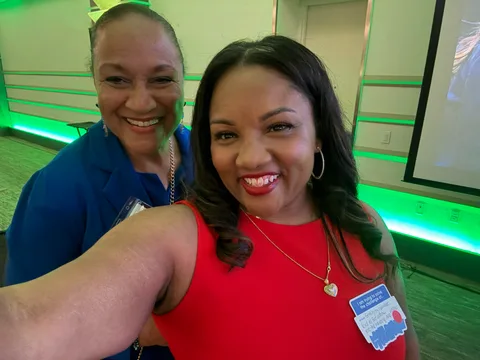
There are moments in life that seem ordinary when they’re happening, but later you realize they were quietly trying to teach you something. For me, it was four simple words. “Just let me help.”
I had just finished delivering a keynote at a conference. It had been one of those incredible days that fills your heart while completely emptying your tank. I’d spent hours speaking, connecting with attendees, signing books, taking photos, answering questions, and pouring into people. I was running on adrenaline, but underneath it all, I was exhausted.
Throughout the day, one person kept showing up. Tanya. When I arrived, she offered to help me unload my bags. “No, I’ve got it.” She offered to help set up my books. “I’m okay.” She offered to help at the book table. “I can handle it.” Later, after hours of speaking, she noticed I hadn’t had time to eat. Before I knew it, she had brought me food. Again, my instinct was to decline.
Finally, after hearing “no” more times than she probably cared to count, she looked at me with a smile and said, “Just let me help.” I laughed. But something about those words stayed with me long after the conference ended.
It Was Never About the Bags
At first, I thought my resistance came from being independent. I’ve always been capable. I’ve built a career on showing up, solving problems, leading teams, and taking care of people. Being dependable has become part of my identity.
But as I reflected on that day, I realized something uncomfortable. I wasn’t resisting the task. I was resisting receiving.
The truth is, I wasn’t saying no because I didn’t need help. I absolutely needed help. I was tired. The truth was much deeper. Somewhere along the way, I had become incredibly comfortable giving to others—but deeply uncomfortable allowing others to give to me.
The Story I Didn’t Know I Was Carrying
As I dug deeper, I realized there was another story running quietly beneath the surface. What if accepting help meant I owed someone something?
If I’m honest, I’ve experienced relationships where generosity came with conditions. Favors became leverage. Kindness became something that could be referenced later. After enough experiences like that, you start believing it’s safer to need less.
It’s easier to carry your own bags. Pay for your own meal. Figure it out yourself. Never inconvenience anyone. Never owe anyone. So you become fiercely independent.
The problem is that the same walls that protect you from disappointment also keep out genuine connection.
Then Came an Unexpected Mirror
Around the same time, I was going through acupuncture treatments as part of my fertility journey. During one session, my acupuncturist noticed something interesting. When she placed needles on the right side of my body, I could immediately feel the sensations. On the left side, almost nothing.
She paused and said, “The left side is associated with your feminine, your receiving side.” Then she smiled. “I think you have a block around receiving.”
Whether you believe in acupuncture or not isn’t really the point. Because in that moment, I didn’t think about needles. I thought about my life. She was right. Not just physically. Emotionally. Relationally. Professionally.
Receiving had always been difficult for me. Receiving help. Receiving compliments. Receiving kindness. Receiving support. I had become so skilled at giving that I never realized I hadn’t learned how to receive graciously.
Then I Started Seeing It Everywhere
A few days later, I was facilitating a leadership development program. As part of an exercise, participants were asked to give genuine positive recognition to someone at their table. Giving the compliment was effortless. Receiving it? Not so much. “I was just doing my job.” “It wasn’t that big of a deal.” “The team deserves all the credit.” “You did great too.” Almost no one simply said, “Thank you.”
That’s when it clicked. This wasn’t my issue. It was our issue. Especially among high achievers. We’re taught to work hard. To contribute. To sacrifice. To serve. To give. But very few of us are ever taught how to receive.
Receiving Is a Leadership Skill
As leaders, we often think our greatest responsibility is serving others. And it is. But leadership is also about creating relationships built on trust. Trust requires reciprocity.
When someone sincerely offers encouragement, receive it. When someone offers a compliment, let it land. When someone genuinely wants to help, allow them to contribute. Because healthy people don’t keep score.
Tanya wasn’t helping me because she expected something in return. She wasn’t building social capital. She wasn’t trying to earn points. She was helping because helping is part of who she is.
By constantly saying no, I wasn’t protecting myself. I was unintentionally preventing someone else from expressing generosity. That’s a humbling realization.
Three Ways to Practice Receiving
If this sounds familiar, here are three practices I’ve been working on myself.
1. Replace “I’ve got it” with “Thank you.”
Before automatically declining help, pause. Maybe you truly don’t need it. But don’t reject kindness before you’ve received it.
2. Let compliments land.
The next time someone tells you that you did a great job, resist the urge to explain it away. Don’t minimize it. Don’t redirect it. Simply say, “Thank you.” Then let yourself believe it.
3. Ask yourself what story is driving your independence.
Are you declining help because you’re capable? Or because you’ve learned that accepting help isn’t safe? Those are two very different things. One is confidence. The other is protection. Knowing the difference changes everything.
Just Let Me Help
Looking back, I don’t remember exactly which bag Tanya carried. I don’t remember how many books she put away. I don’t even remember what food she brought me. What I remember is the relief I felt when I finally stopped resisting.
The irony isn’t lost on me. I spend my life teaching leaders about connection, trust, and belonging. Yet I was struggling with one of the most fundamental parts of all three. Receiving.
Leadership isn’t measured only by how much you can carry. Sometimes it’s measured by your willingness to let someone else carry something with you.
So these days, when someone offers support, I’m practicing a different response. Not, “I’ve got it.” Not, “You don’t have to.” Just… “Thank you.”
Because I’m finally learning that receiving doesn’t diminish my strength. It deepens my relationships. And maybe leading at full volume isn’t just about having the courage to show up for others. Maybe it’s also about having the courage to let others show up for you.